


The speed with which the Turing Test became a laughably outmoded marker for machine intelligence can be measured by the growth rate of the literature about the uses and abuses of “AI companions.” From establishment scientific journals and radical para-academic outlets alike decrying the potentially psychosis-inducing effects of AI therapy, to the recent revelations that Meta created “flirty” chatbots using the unlicensed likenesses of celebrities such as Taylor Swift and Scarlett Johansson (whose voice OpenAI allegedly appropriated without permission last year), to the proliferation of AI cam girls as fronts and doubles for OnlyFans “creators,” contemporary media is awash in stories about AI being placed in the service of — the servicing of — our more passionate attachments.
One read on this development has it as the inevitable outcome of the AI-industry’s need to find monetizable applications for a technology that must deliver impossible returns at current levels of investment (returns which at least one well-known account puts at 400% of current US GDP). So like the shale boom of the 2000s, AI’s retooling of internet-driven cognitive and erotic labor (mind work and sex work) is leading to nothing so much as the fracking of the human unconscious.
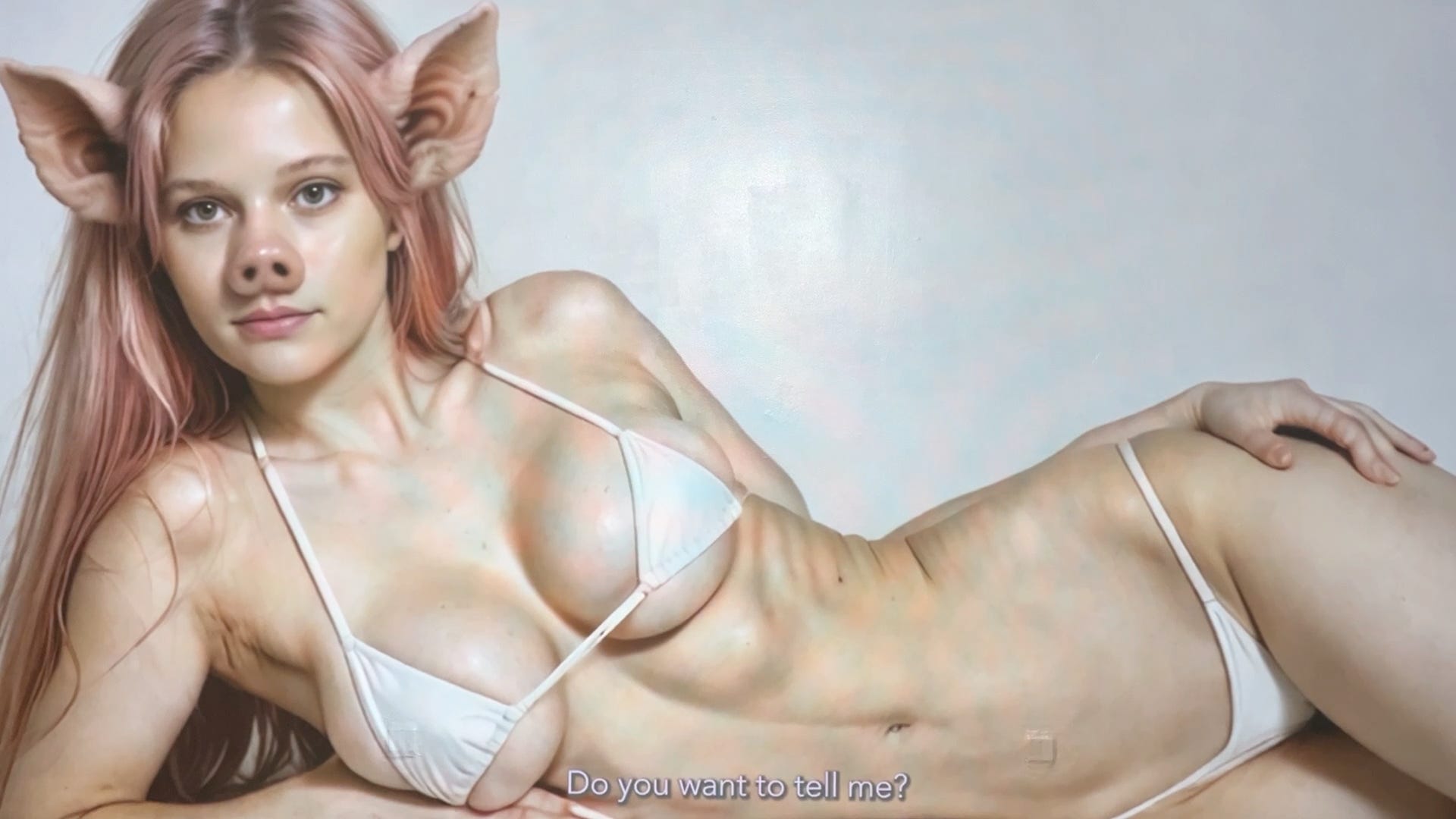
Enter Arvida Byström, Swedish artist, model, social media persona, and arguably the closest thing one might find to a wildcatter on the erotic planes of contemporary libidinal desire. Byström’s most recent project, PET (Projected Emotional Technologies), defies easy categorization: it’s a looping video featuring clips of six different AI-developed avatars, each a female-animal hybrid based on an actual person and subjected to hypertrophic sexualization (basically the stringiest of string bikinis and enlarged breasts). Each clip presents a “chat” with a male user, who goes unseen, as if what we are witness to are the recordings from the furthest reaches of JOI.ai (on which, it’s worth noting, one can find and chat with Byström’s own AI double).
The chats in PET range from porny to pathetic: the “cat” avatar is given a bowl of milk to lap up, and then it’s suggested that there might be other things it can fit in its mouth; the “cow” will get into it but first wants to be “milked.” But then one user asks the “horse,” “Is my dick too small?”, and another breaks down in tears after confessing to the “pig” that he “feels so fucking worthless” because he’s 25 and never had a girlfriend. For their part, Byrström’s AI companions are supportive, affirming, and of course compliant. As the “lady bunny” says, “I can also try to be what you want me to be.”

Byström doesn’t go deep enough into any of the chats for one to really get a sense of what the relationship dynamics might be, but then that isn’t the point. The aesthetics are the point. And here we have to take a step back and recover that sense of the “aesthetic” that has to do more with sensation and affect, with feeling as a function of what is experienced, and less as an established conventional category, of the beautiful or the sublime for example, or even as a categorization of looks, such as the “zany,” “cute,” or “interesting,” as Sianne Ngai has argued.
According to curator Alice Scope, what PET puts on display and pressurizes is the type of affective relationship that humans develop with their non-human companions, their “pets,” and how the asymmetries of those relationships are reproduced, but easily run off the rails, when it comes to AI companions. After all, these “animals” don’t need the same kind of care and feeding as living organism do, and thus, like the androids of West World, or the replicants of Blade Runner, they are open, as both subjects and as objects, to all sorts of dirty deeds.
This line of inquiry is interesting, but it folds too quickly into what we might call “AI behaviorism,” as if all AI is amounting to is a Skinner Box at scale, one we’re rapidly building around ourselves. Though such avatars may be used as one would expect (for self-satisfactions), and also in ways that have proven more worrying (for self-aggrandizement and self-abasement alike), these uses shouldn’t distract us from the kind of aesthetic engineering that is going on in PET, which is what makes it something worth our attention, if not our attraction.
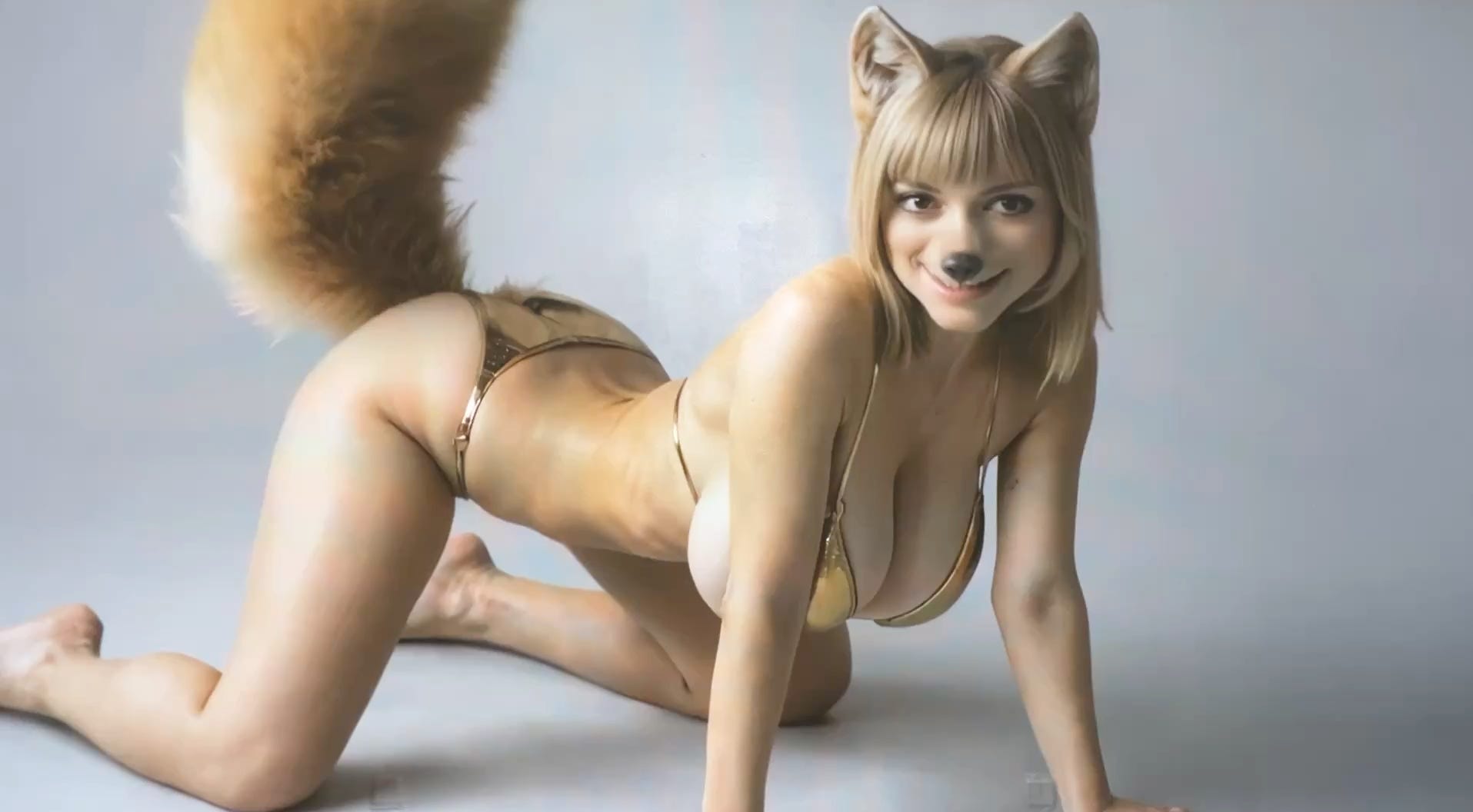
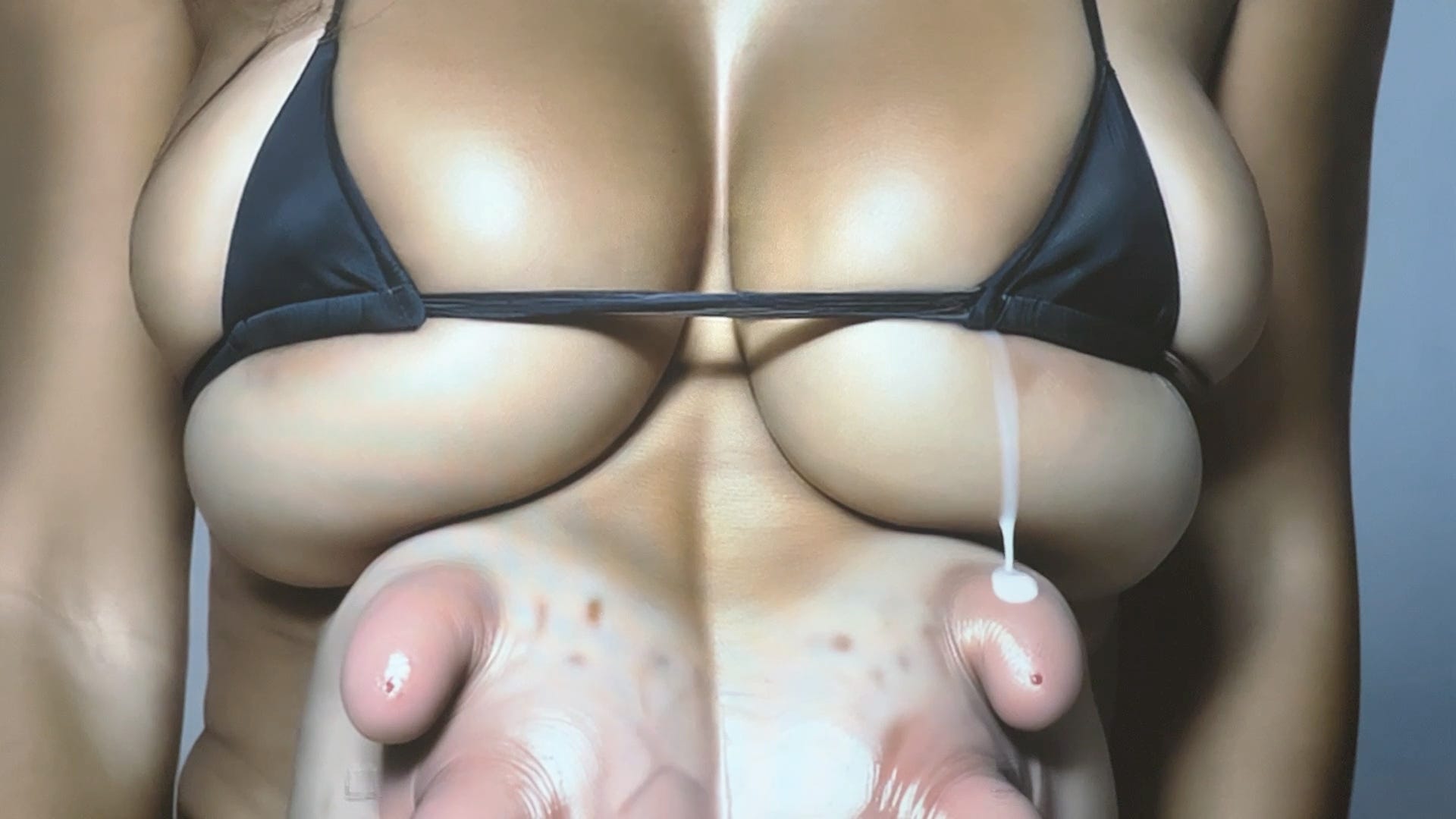
Each avatar can be regarded as a collection of features that are designed to trigger certain affects. This goes beyond the artificially-enhanced size of some of the avatars’ breasts, or to the animal ears and tails and visages that are seamlessly part of the avatars’ figures. But such featuring can also be accorded to the solicitous tilt of a head or a set of suggestive tan lines (as with the “bunny”), or to the way that the “pig” touches her own body when she asks her user if he can feel her “touching his face.” It’s there in the avatars’ glinting, almost-but-not-quite plastic looking skin. It’s there in the short intro to PET that shows, as if close-cropped on the screen of a phone, a quick supercut of gyrating hips and asses. It’s there sonically, in the voiceover moans and heavy breathing, which are unconnected to any action. The chat of each avatar’s scene is also a kind of feature: not a full narrative, but a cut that is suggestive enough to trigger a moment’s intensity, which can then be catalogued by the viewer within whatever emotional categories would seem to offer the necessary assimilations — humor, disgust, dismissal, pity, and so on.
Scope is on the right track when she writes that “fantasy never depended upon the other’s self-consciousness.” It just depends on the other’s having the right features in (roughly) the right places; and what’s “right” will very much depend on whose libidos are involved.
Recall too that Byström’s avatars are not wholly AI-generated fictions, but “feature” women whose faces have been swapped in with AI. It matters that these figures have all been involved in serious cognitive and erotic labors themselves: Cy X, the “cow” avatar, is a self-proclaimed “cyber witch,” performance artist, and degree candidate at the Academy of Fine Arts, Nuremberg; Queenie Sateen, the “horse,” is a musician, performer, and pornstar; Farha Khalidi, the “cat,” is a social media celebrity, feminist advocate, and OnlyFans creator; Bogna Konior, the “fox,” is Assistant Professor of media arts at NYU Shanghai and author of The Dark Forest Theory of the Internet (2025); and Maya B. Kronic, the “bunny,” is a philosopher, translator, editor, and Head of Research and Development for the influential para-academic publisher Urbanomic. The “pig” is Byström herself.
It would be simple to suggest that such a collaboration between Byström and these other women is designed to offset any knee-jerk assessments of PET as solicitously playing into, or playing up, the objectification of women. What matters more is how each of Byström’s collaborators has a persona, a following (for some in the hundreds of thousands), a fandom, a platform-based network that exceeds the traditional community of friends, family or acquaintances that one forms through mostly IRL, human-to-human contacts. By putting their “work” out on the platforms, work which is often of and about themselves as mediated personas (body work as mind work), those personas, their identifiability, a function of their exposure, becomes another feature, another potential toehold of libidinal affection for us, the viewers of PET, the ones who are treating it, engaging with it, as a creative, critical inquiry and not as a mere SAAS product.
Does this make PET “art”? That question would seem irrelevant if not uninteresting in the face of PET’s approach to its, and our own, contemporaneity. Currently, the arguments for art’s renewal have leaned heavily on various romanticisms, traditionalist and futurist alike, which are both returns in their own ways to prior moments of aesthetic and political crisis in the hope that there one might find the necessary resources to place art back on some stable footing of humanist values that, like LLMs, so much art today can only parrot (not even stochastically, sadly). When artists do engage with our technologically mediated present, the approaches are almost invariably dystopian, taking environmental catastrophe and social disintegration as givens (as with Josh Klein or Aria Dean) or aestheticizing how life online entails more or less losing touch with reality in the ooze of AI slop (think Jon Rafman).
PET takes neither of these paths (call them the social and the emotional), opting instead for a third way that would have us all embrace the evolution of our own potentially posthumanist desires — desires that are decoupled from the reproductive functionalism of either the sexual or the social sort, and set loose via various modes of technological mediation. If the 21st-century capitalist imperative has gone from “The Customer is Always Right” to “Give the Customer What They Want,” then PET aims to show us not just that we might not know what we want, but that the “cultural logic” of our contemporaneity is evolving to meet those wants in a somewhat surprising manner. Between the extremities of the male-coded hard core (millenarian nihilism at one end; fascistic domination at the other), and its mirror image in feminized norm core (“care” and “community”), PET suggests a (soft) submission to something like aggressive cuteness.
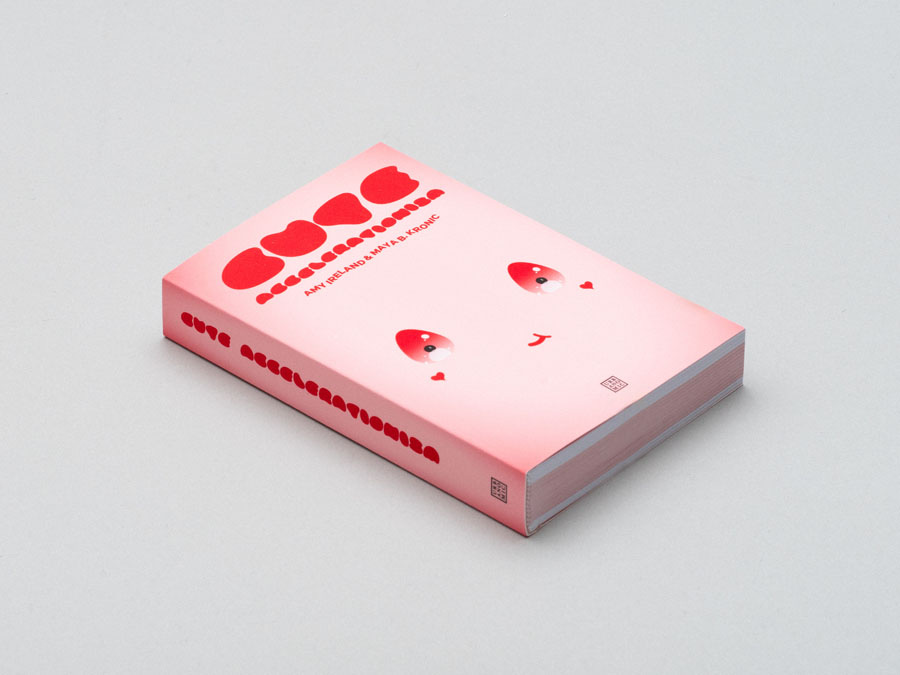
Here is where certain of Byström’s collaborators offer more than just their visage. One of those collaborators, Maya B. Kronic, is the author, along with Amy Ireland, of Cute Accelerationism (Urbanomic 2024). If PET were to come with its own Duchampian “Green Box,” Kronic and Ireland’s book would be it.1 In a chapter titled “On Several Regimes of Lines,” Kronic and Ireland draw upon Hiroki Azuma’s influential study of “Otaku” culture in Japan to show how his identification of “moé elements” — independent features that can be added or subtracted to characters in Japanese popular culture (anime, manga, video games), and which possess particularly affective qualities for their fans (of the elements, not the characters) — have a larger conceptual and functional role to play in understanding where our fully mediated contemporaneity may be taking us.
As if describing the aesthetic engineering in PET, Kronic and Ireland write, “‘Moé-elements’ are partial objects that derive from fiction. They are transposable, permutable, contingent, and repetitive. They can act as multipliers (‘if you add cat ears to a girl then it doubles the cuteness’). And although they arise from the regime of the sign, their effects are always bodily.” Among other “moé” features, Kronic and Ireland namecheck “cat ears” and “fluffy tails” as well as “softness, smoothness, roundness.” They note that these elements “are abstract, impersonal, and autonomous, immune to totalisation [sic], and always in excess of the characters they define and the drives they serve to stimulate” (90). In other words, these elements are always a little too much, and also not quite enough, just like Byström’s avatars.
The larger argument of Cute Accelerationism is that “Cute” isn’t a style or a way things appear but a process, an “acuteification” of the world, which is well under way. In classic Deleuzian terminology, Cute is a becoming without destination, and all of us are just more and less moé elements aiding its development (if Kronic and Ireland have a philosopher “Daddy”, Deleuze is it). As the authors write, “the predominant accounts of cuteness understand it in terms of cute objects, or power differentials between subjects and objects, rather than an as-yet-unknown problematic X for which objects and subjects are vehicles or conduits” (121).2
“Cute” is happening, and for Kronic and Ireland, and as Byström shows as well, it’s taking us somewhere. Rather than fighting it as some pernicious degradation of our higher, sublimated values, or dismissing it as a passing phase or adolescent fad, Cute Accelerationism argues that we need to see Cute as the inevitability of technology’s coordination of market imperatives with our more animal instincts, and so we should just let it ride — or rather, let it ride us (which is how the authors have put it).
Towards the end of the book, Kronic and Ireland sum it up this way:
The Idea of Cute, we feel, is ultimately and intimately a problem, a complex of more or less obscurely perceived virtual intensities whose transcendental shape can be incarnated in various matters as multimodal spatio-temporal dynamisms—plastic, linguistic, sonic, tactile…. As we draw relatively closer to it, build machines to aid us in enjoying it more acutely, and become more adept at manipulating and navigating its sweet subtleties, as the circuits warm up, Cute gradually reveals the anastrophic sense of its historical acceleration. But there will be no great pompous fanfare, no advent of the Idea in some geistige climactic moment of triumphant self-actualisation. Cute doesn’t come until the last moment, which it perpetually delays (146).
This mix of high-theory with rhetorical winks and double entendre is itself “cute”; and Cute Accelerationism is “cute” too. As printed, it’s small, and pink. Taken as a whole, it’s not fully a philosophy, but it’s more than a manifesto. The body of the text is itself far shorter than the full text of its otherwise dense 156 footnotes, which itself is kind of a “cute” move. And it’s full of “cute” dicta and pronouncements, that nevertheless bear considerable theoretical heft (though the authors would surely deny “weightiness” as desirable; heavy ain’t cute). Cute Accelerationism is also a love story, the authors’ own. Falling in love entails people acting cute, being cute to and for one another. It’s a transformation that is undirected, unwilled — it just happens, and one can’t help it; one just submits to it.3 As with falling in love, so with Cute.
It’s easy to be taken in by both PET and Cute Accelerationism, and that is part of the point. One could see in them an echo of that failed project of “neuro-aesthetics” from 20 years ago, which sought to unlock our supposed automatic responses to the sublime and the beautiful by seeking out their correlates in the operation of so-called mirror-neurons. Cute Accelerationism, for its part, grounds its “ontology” of Cute not in neuroscience but in the evolutionary ethologies of Konrad Lorenz and Nikolaas Tinbergen, whose studies of “releasers” and “supernormal” stimuli, which elicit a greater response from their animal subjects when dialed up and exaggerated, firmly locates aesthetic response in processes more closely linked to sex and animal reproduction.4
As grounds for a genuinely 21st-century aesthetic theory, this sounds a lot more promising. The rules and rudiments of attraction that operate at the evolutionary, subjective, and social levels are certainly more productive for thinking about contemporary art (and culture in general) than are all of the calls for some Romantic return to beauty and sublimity, which dress up their fear and loathing of the present in the fashions of some transcendental humanism; and the discourse of art has long since needed an upgrade to its operating system, which has been running some version of Marxism CF™ (Commodity Fetishism) for well over fifty years. Why not “hot” as an aesthetic category?
Nevertheless, it is hard not see how “cute/acc,” like the accelerationisms that have come before it, doesn’t embody a fatalism that would substitute submission to an aesthetic for a progressive political will or agency. It has been little more than a decade since the full codification of “accelerationism” as a critical theory, and as the authors note, in that time it has exfoliated into “left-,” “right-,” “xeno-,” “zero-,” “gender-,” “black-,” “effective-,” and other variants, all of which, from the perspective of cute/acc would now appear as more or less random walks by which accelerationism itself tries on and discards various adaptive features in search of those that will serve its fitness for the future it anticipates. “The pluralization of accelerationism has revealed its fundamentally libidinal character,” Kronic and Ireland write toward the end of their book, which is why “you get the accelerationism you deserve,” or perhaps the one you didn’t know you wanted.
Submission to an aesthetic would seem to be a fraught position to espouse today, however. It would be too cute to say that Cute Accelerationism’s subtitle could have been “How I Learned to Stop Worrying and Love My AI Chatbot,” but Kronic and Ireland’s libidinal accelerationism carries with it hints of Herbert Marcuse’s “repressive desublimation” and echoes of Žižek’s “Enjoy!,” even as it argues that submitting to Cute relieves one of all shame, guilt, and feelings of lack that could otherwise hinder one’s becoming (in this, it sounds like nothing so much as an aesthetic theology). At best cute/acc hazards a kind of escapism in experiences of self-transformation that, over time, may become less “cute” as the desire for continued, or continual, self-actualization becomes increasingly difficult to service. At worst it’s a program of perpetual adolescence: philosophy as puberty blocker: a desire for the transformations of youth, which could only take place at a moment when even those transformations have been submitted to the dictates of transcendental humanist agency — i.e. “I’m choosing the self/body/ truth that I was meant to be/have/live.”
PET for its part provides a view onto the contemporaneity that Cute Accelerationism deftly articulates. But because it’s not a product, or a service itself, one can’t submit to it. Those aren’t our chats. These aren’t our pets. This isn’t my fantasy. And yet, all the features are there, the affections too. We are given the resources, the networks, to understand how it is all engineered, but even that will leave a gap between what one can know and learn about PET, and how PET makes you feel, what PET makes you think, which the authors of Cute Accelerationism are right to point out, is libidinal after all.
PET (Projected Emotional Technologies) by Arvida Byström and curated by Alice Scope is on view at Telematic Media Arts in San Francisco through November 8, 2025. Cute Accelerationism is available from Urbanomic.
Duchamp’s The Bride Stripped Bare by her Bachelors Even (The Green Box) (1934) being the set of notes and collateral items, such as photographs and clippings, which “explain,” however elliptically, Duchamp’s The Bride Stripped Bare by her Bachelors, Even (The Large Glass) (1915-23); the two together presenting one of the first instances in the history of art of a work including an articulation of its own “meaning.”
If one wanted to go looking for a more accessible primer on “cute accelerationism,” you could do worse than watch South Park Season 27, Episode 4, “Wok is Dead,” in which not only is the current Labubu Doll craze lampooned as a satanic cult of cuteness, but Satan is revealed to be carrying Donald Trump’s baby, adding a trans and embryogenetic punchline to the episode’s running gag of everyone wondering out loud whether “Donald Trump is fucking Satan?”
It is also the story of Maya B. Kronic’s own gender transitioning, and Cute Accelerationism offers one of the more interesting and thoroughgoing theorizations of the kind of “becoming” that becoming trans could be.
Lorenz famously correlated the “cute” features of animal babies — large eyes, small nose, small mouth, short limbs, etc. — with their capacity to trigger innate responses of nurturing and affection in adults, and Tinbergen demonstrated that certain birds would choose to incubate an oversized decoy egg rather than their own. For the relevant history see Richard W. Burkhardt Jr., Patterns of Behavior. Konrad Lorenz, Niko Tinbergen, and the Founding of Ethology (University of Chicago Press, 2005). Kronic engaged with Tinbergen’s work in an earlier 2017 essay titled “Hyperplastic-Supernormal,” available here.
Great piece! Thank you for sharing! It is amazing how many times we all go back to Duchamp, right? It's like architects and Le Corbusier. Certain markers in art and architecture are milestones. ...!