

Collage and Filter, Part 1
The beginnings of a new ongoing project tentatively titled "Art in the Age of the World Image," prefaced with apologies.

The delay of this post was precipitated, obliquely, by Artlance. I built that enterprise to solve a business model problem for art criticism (and other types of criticism), and thankfully it appears to be working. This has taken time, and effort, and continues to pull me away from being able to see and write about art as much as I would like. But it has also had an unintended consequence:
I built Artlance to solve a problem I experienced: the poor pay and editorial constriction that plagues writers who want to write about art with any kind of critical intelligence. It does that via a novel model which Artlance calls “commissioned independence”: galleries, museums, arts organizations and others can post “commissions” to Artlance’s platform, and writers then “claim” those commissions. Commissioners don’t choose writers. An editor doesn’t assign writers. Writers choose their assignments, and complete those assignments with full editorial independence — i.e. commissioned independence.
Artlance does have editorial standards, and importantly, it also has a Conflict of Interest policy. What is the point of commissioned independence without a commitment to editorial integrity?
And here is the unintended consequence: as the founder of Artlance, for whom commissioners represent the demand side or our business equation, I now approach every exhibition-maker that might desire independent critical writing about their shows as a potential “customer,” someone who is going to fund the critical intelligence of Artlance writers and so contribute to this new model commissioned independence. Were I to be one of those writers, however, every commission I would claim would be a conflict of interest.
As much as I would like to be able to claim commissions, to get paid (decently) to write criticism, I would never be able to do so “independently,” as it were, as long as the writing takes an exhibition or presentation as its hook. There will always be an actual, or a potential, commissioner behind those shows, and one can’t write with any kind of critical intelligence for someone you want to do (repeat) business with.
That’s fine. Artlance is more important.
What this means for my writing here on Consecutive Matters is no more “Some Art in…” takes on shows that I happen to catch in different cities. No more four-thousand word reviews of museum shows. No more writing about presentations by actual or potential Artlance commissioners. There is no magic wall between Consecutive Matters and Artlance—were I an Artlance writer, this is where that work would appear, after all.
So what will appear here? Something like what follows. Some attempt at “theory,” which has gotten a bad rap of late, or seems like it’s something that belongs to the past, though in my conversations with artists and others, one senses a latent desire for it. So attempts at theory, critical evaluations of art (and books) unconnected to the doings of exhibition-makers, to the extent this is possible. In other words, even more niche, ever more tiresome.
Apologies in advance.
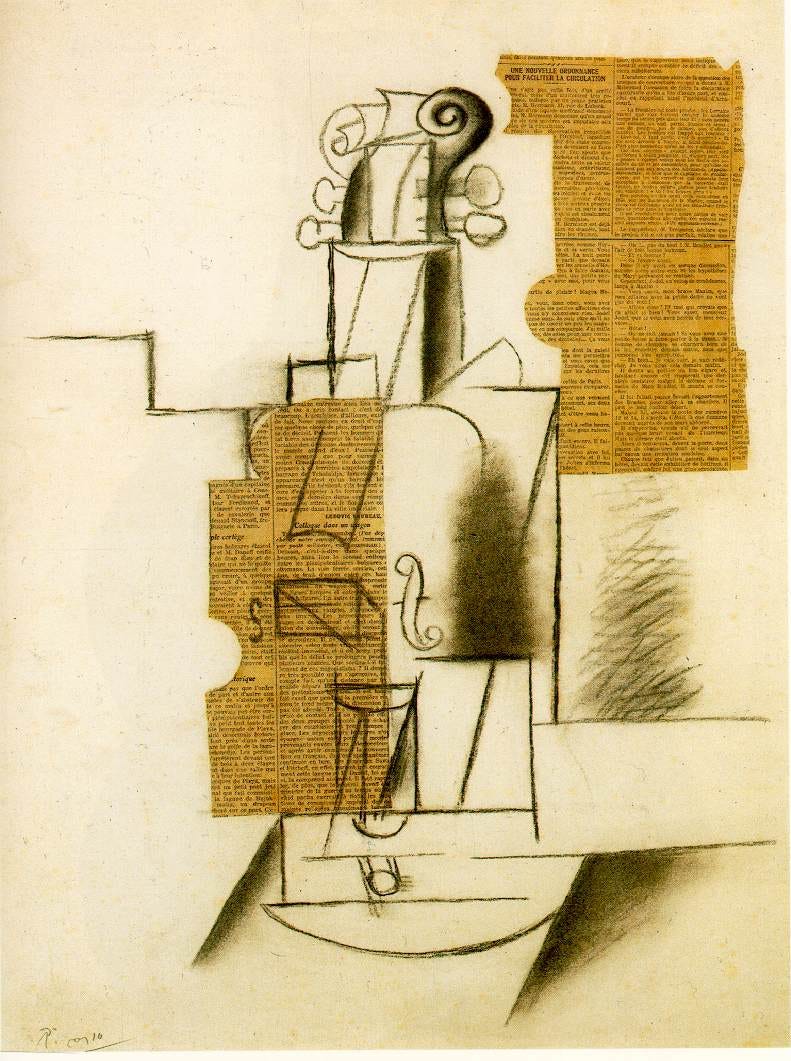
With few notable exceptions, the critical discourse of contemporary art has largely failed to keep up with painting today and what is otherwise thought of or named “two-dimensional” work. Performance and installation and video and other “post studio” work find their critics and advocates for sure, these being the genres of practice that dominate the biennial presentations and are still borrowing against the endowment of the avant-garde.1 But for most art that has to contend with its status as decorative, the terms of evaluation are few and far between.
For the past decade or more, where painting is concerned, questions of form—how the work of art does what it does, how it means what it might—have been drowned out by the orchestrations of content and the buzz of the market, which have made such questions easy to ignore if not dismiss.2 Nowhere is this diminished capacity for an assessment of form more evident than in most commentators’ incapacity to see anything other than “abstraction” and “figuration” in the work on offer. Yet these terms do little descriptive and even less evaluative or explanatory work. To put it bluntly, today “abstraction” and “figuration” mean little to art but much to the modes of identification, and so identity, that dominate the discourse of art as much as politics.
One way of regaining our eye for form would be to enhance our sensitivity to space and its representation. In what I am calling “the age of the world image” (on which more in subsequent posts), this is difficult enough to do, for surely one of the reasons that form has been so hard to see in today’s world is the absolute dominance of the “image” and its capacity for reducing anything of any complex dimensionality, objects and subjects alike, down to the relative nonspace of a binary file.
What goes for advanced formal analysis today often takes the heightened abstraction of this nonspace and the dynamics of its populations and networks and protocols as givens. It then looks for how the work of art “models” or “reflects” or even “deploys” these dynamics and, if deemed critical in its own right, “exacerbates” or “detournes” or “dispossesses” them, such that one’s aesthetic experience, or rather one’s intellectual experience of the aesthetic, becomes (presumably) edifying and (wishfully) emancipatory.3
What is remarkable is that, during this period when few have failed to acknowledge the vast proliferation or “explosion” of images everywhere around us, critics have chosen to turn their attention away from the kinds of art works—paintings in particular—that have the inherent capacity to address themselves to the form—which is to say the space—of the image itself.
Questions of how images might be classified, how they circulate, how to clock their velocities and whether they are “poor” or “derivative” or “vulgar,” what their powers or effects on people and populations might be—these questions assume the coherence of the image while disavowing it as too slippery to address on its own.4 It’s understandable. The image is an easy concept to use but a difficult concept to grasp, which is why works of art that address themselves specifically and directly to the image—as paintings and photographs and similar kinds of work do—would be the works to which we would want to attend if we are to get a proper grasp on the image, something we should want to do.
For seeing works of art today requires seeing them, to use a demodé phrasing, always already as images: not merely or just as objects or situations which one can capture in JPGs or MP4 files, which can then be (re)posted and (re)mixed and (re)circulated (which activity is necessarily if not sufficiently constitutive of the age of the world image), but as things that are made in a world where being imaged—an ontology: think “being, imaged”—is constitutive of the work of art, if not the world, itself.5
What is more, we are no longer in a world in which the sufficient conditions for being imaged entail only composition and reproduction: the conditions that have underwritten both the production and the evaluation of art up to our present. With the advent and advance of widely distributed artificial intelligence, we are confronted with a world in which the sufficient conditions for being imaged include now computation and generation as well. This is something new, and any criticism of art, by way of the image, must confront it.
It is too early to tell whether this shift from one world to another, from, say, the “age of the world picture” to the “age of the world image,” is a “break” or a “turn” or some other favored metaphor for change, but it is a change nonetheless, and attending to the works of art which themselves attend to their status as images, to their inescapable condition of “being, imaged,” will take us some way towards understanding how the current age is different from what came before, and how to evaluate works of art which recent criticism has largely failed to do.6
It will be my contention, elaborated in posts to come, that understanding the space of contemporary painting, specifically painting which takes its project as having something to say about the conditions of experience (aesthetic and otherwise) in the age of the world image, entails the development of two different yet intertwined concepts: collage and filter, as it is through the operations of collage and filter that space is encoded in the image. Painting, and other work that self-consciously addresses itself to its “being imaged,” is thus where we must go to see these operations of encoding at work.7
What do I mean by collage and filter? To get well ahead of myself: in the composition of images, collage is conditioned by the discrete and operates by combination, which is primarily additive. In the modification of images, filter is conditioned by the continuous, and operates by modulation, which is primarily subtractive. When deployed together, collage and filter are the operators of image creation.
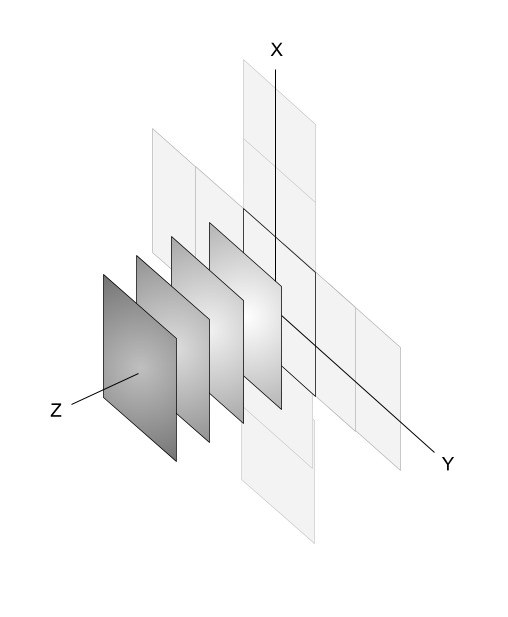
In Part 2 of this series, I will look closely at collage itself, both the earliest examples of it, which offer the first moment that the space of visual representation went from being “depicted” to “encoded,” to contemporary artistic practices that elaborate how collage operates today as a “combination of encodings.” Part 3 of the series will take up the concept of “filter” similarly in its historical and contemporary dimensions, and Part 4 will elaborate both concepts within the context of what I am calling “the age of the world image.”
That context, importantly, is the context of AI, and to get very far ahead of myself, what we see today in the two dominant paradigms of image generation by AI models, “autoregression” and “diffusion,” are, at a conceptual level, operations of collage—discrete, additive, combinatorial—and the operations of filter—continuous, subtractive, modular.8
That the products of pictorial intelligence, both human and artificial, might be understood, and so evaluated, in similar terms, is surely an advance over the descriptive vocabulary that has become a burdensome inheritance of much visual art. To date, what artists have going for them is their self-consciousness. We may be able to see the operation of collage and filter in the profusion of images that AI can generate today, but it is only in the works of art, made by artists, that we will be able to recognize it.
I use these terms descriptively, not theoretically. To name “painting” or “photography” or “sculpture” is not to make or keep alive claims for the mediums but to acknowledge that these now non-specific terms identify things and practices that continue to have descriptive force but not explanatory power. The critic who had done the most to address practices that have stretched beyond two dimensions is for sure Claire Bishop in Disordered Attention: How We Look At Art and Performance Today (Verso, 2024).
The most recent and widely disseminated version of this dismissal can be found in Josh Kline’s “New York Real Estate and the Ruin of American Art,” October 195 (Winter 2026). A notable exceptions in Brian Droitcour’s “Software as Underpainting,” for Eyebeam.org (September 2024).
Such terms can be found variously writing by Hal Foster (cf Bad New Days, Verso, 2015) and David Joselit (cf Art’s Properties, Princeton, 2023).
The critics implicated here range from Hito Steyerl and Dean Kissick explicitly, to W. J. T. Mitchell, Gottfried Boehm, and Jacques Ranciere implicitly. Even Frederic Jameson can only treat the image in terms of a problem within photography or film, never as a problem on its own terms, as he reveals at every mention of the word in The Years of Theory (Verso, 2024).
This is not to suggest that artists make their work with an eye to how it will play or be received as an image (on socials, in a PDF, on a screen, etc.), though many no doubt do; it is rather to acknowledge that part of what it means for a work of art to be what it is, for a work of art to achieve its status as a work of art today, is for it to aspire to, and to achieve, a particular type of imagehood.
In a subsequent entry in this series I will address the “mathematization” that Martin Heidegger declaimed in 1938 as part of his lament of the world turned to “picture” and the forgetting or loss of Being that this entailed. Heidegger’s loss is actually double, insofar as the “perspectival” picture he blames for the loss was itself already obsolete by the early years of the 20th Century. This will require a return to Erwin Panofsky’s “Perspective as Symbolic Form,” first delivered in 1925, itself an analysis that draws on contemporaneous accounts of the “end” of conventional representations of space (El Lissitzky’s specifcally) and which is highly suggestive for a “collage” reading of the moment that precedes the perspectival.
My jumping off point for this discussion of encoding will entail looking again at Greenberg’s essay on “Collage” from the collection Art and Culture (1961)—I know, I know, yawn—and Rosalind Krauss’s “In the Name of Picasso,” October (1981) and again in The Originality of the Avant-Garde and Other Modernist Myths (MIT, 1985). Part of the argument I will be making is how the turn to structuralist analysis of visual art in the 1970s and 1980s, which afforded the understanding of collage as deploying a kind of “code,” a “metalanguage of the visual” in Krauss’s phrasing, parallels the theorization of early computational media editing capacities, i.e. coding, as “metamedia.”
On these paradigms and the attempts to develop a hybrid of them see Zhao et al “Unified Multimodal Understanding and Generation Models: Advances, Challenges, and Opportunities” (2025), link. For the canonical paper on diffusion models see Sohl-Dickstein et al, “Deep Unsupervised Learning using Nonequilibrium Thermodynamics” (2015), link. On autoregression see van den Oord et al, “Pixel Recurrent Neural Networks” (2016), link; Esser et al, “Taming Transformers for High-Resolution Image Synthesis” (2012), link; and Ramesh et al, “Single-Shot Text-to-Image Generation,” (2021), link.
This is excellent, Jonathan. Lots to say. Susan Buck-Morss has a brilliant short piece in October’s 1996 “Visual Culture Questionnaire” that might be useful for a future installment; she frames this problem well before the social media image-stream became our default condition.
I’ve also been circling something adjacent in a piece I recently started, on two 19-century paintings I first “discovered” online and now keep seeing recirculated in my Instagram feed—works that pull on my heartstrings, but which also raise (to me) the obvious questions about the impoverishment, or at least transformation, of aesthetic experience and how we talk about painting today. Your essay is very helpful for thinking through that tension.
P.S. On the Greenberg footnote: given your larger argument about the difficulty of recovering formal judgment, I wonder whether enough time has passed to read him again without simply inheriting the anti-Greenberg reflex. Much of the dismissal now feels secondhand—less an argument with Greenberg than with what he was made to stand for at the emergence of postmodernism. But postmodernism, too, is now eclipsing, and even Foster came out against his own thesis on the Anti-Aesthetic in Artforum. That should make it possible to return to Greenberg seriously, extensively, and on his own terms.